Is AI the Great Equalizer?
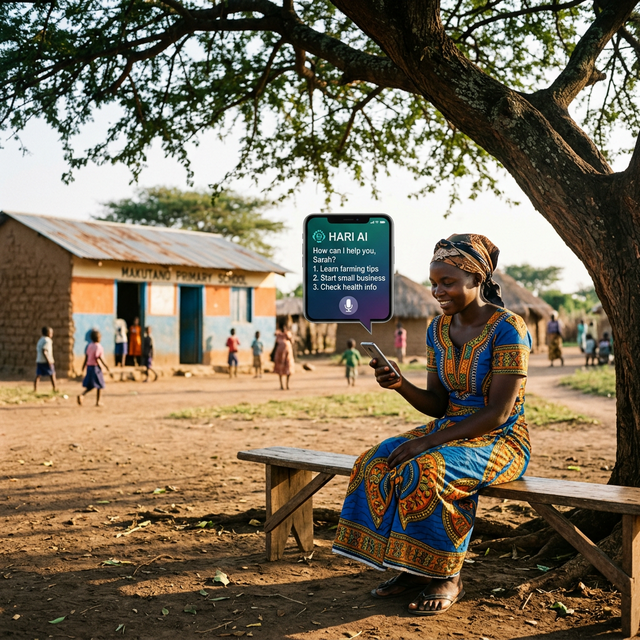
As artificial intelligence reshapes economies and societies across the globe, a critical question emerges for communities like ours in Iganga District: will AI be the great equalizer, or just another wave of technology that passes rural communities by?
The Digital Divide Today
Today, millions of people in rural Uganda and across sub-Saharan Africa remain disconnected from the digital revolution. Limited internet access, lack of devices, and minimal digital literacy create barriers that keep communities from participating in the global knowledge economy. While cities like Kampala race ahead with tech startups and innovation hubs, rural areas still struggle with basic infrastructure.
Where AI Could Change Everything
But AI is different from previous technological waves. Here's why it could be transformative for rural communities:
Healthcare Without Doctors: AI-powered diagnostic tools can analyze symptoms and medical images, bringing specialist-level healthcare guidance to areas where the nearest doctor may be hours away. A community health worker with a smartphone could screen for diseases that currently go undetected.
Education Beyond the Classroom: Adaptive AI tutors can provide personalized learning experiences in local languages, helping children in remote schools access the same quality of education available in urban centers. When a child in Iganga can learn at the same pace as one in Kampala, the playing field begins to level.
Agriculture and Livelihoods: AI can analyze weather patterns, soil conditions, and crop health through simple mobile interfaces. Smallholder farmers, who form the backbone of rural economies, could make data-driven decisions that improve yields and income.
Language No Longer a Barrier: Large language models are beginning to support African languages, meaning information, services, and opportunities that were previously locked behind English or other colonial languages are becoming accessible.
The Risks We Cannot Ignore
However, the promise comes with serious caveats. Without intentional investment in rural connectivity, affordable devices, and digital literacy programs, AI could actually widen the gap. If only urban, educated populations can access AI tools, the divide deepens.
There's also the risk of cultural erasure — AI systems trained predominantly on Western data may not understand or respect local contexts, traditions, and knowledge systems.
What Organizations Like PECA Can Do
This is where grassroots organizations become essential. At PECA, our Omukisa Program already provides ICT training to women and youth. As AI tools become more accessible, we can:
- Integrate AI literacy into our existing training programs
- Advocate for rural connectivity and affordable access
- Ensure AI tools are adapted for local languages and contexts
- Bridge the gap between global technology and community needs
The Verdict
AI alone is not the great equalizer. But AI combined with community investment, digital literacy, and organizations that understand local needs? That combination has the potential to transform rural communities in ways we've never seen before.
The question isn't whether AI will reach rural Uganda. It's whether we'll be ready when it does.